Thursday, September 11, 2008

Julius Caesar - Theme Questions


1. The qualities of a good leader is one of the play's important themes. To explore this theme, students can do one or more of the following:

• Discuss the qualities possessed by a good leader. Generate a list of these qualities
Qualities of a good leader:
• Task-oriented
• Honest (actions)
• Charismatic
• Able to take control
• Serious
• Spokesman
• Reliable
• Self-sacrificing (people first)
• Intelligent
• Foreign policy
• Not greedy
• Equality for all (treatment)
• Think before acting
• Prioritize issues
• Out of the box


• Make a list of the leadership qualities that the class feels are legitimate. Compare and contrast the two lists and compile one list of leadership qualities that the class feels a good leader should have. Prioritize the list.

• Examine the effect a leader's domestic relationships, physical condition, and/or athletic ability may have on his or her leadership abilities. 


2. Friendship is another major theme in the play. Explore this theme by answering the following questions:

• How far would you go to stop a friend from harming your country?
I would take it in a way that if my friend were harming my country, he or she would not be my friend to begin with. Like anyone, it would be hard to go against any of your friends, but sometimes you have to do what is right to save the many lives of others.
• How far would you go to obtain revenge on someone or some group who destroyed your best friend?
If my friend was as close as family with his or her life impacting mine as well, I would do what it took to make that person feel the pain that I would have. I probably would not kill for religious reasons, but I would go far to an extent. The people in my life make me who I am, and if my best friend was destroyed, then I would be, too.
• Is there anything for which you would betray a friend?
Yes, most likely for harming anyone in my family or for love. If someone or something destroys anything that hits close to home, then there would definitely be revenge.
• Which is more important to you, friendship or personal principles? Why?
I would go for personal principals, but I believe that friendship is more important. Through friendship, you can possibly learn some of your own personal principles, such as being able to forgive, compromise, and be honest. Through friendship, you can learn a lot about yourself that you did not know in the past and become a better person by making personal principles due to that friendship.

3. One of the most sensitive issues in the play is suicide. Research attitudes toward suicide held by the following cultures: ancient Roman, modern Japanese, and modern American. Compare and contrast these attitudes in class presentations or in written essays.
In ancient Rome, suicide was often used for execution where you either choose to commit suicide or have a secondary option, which was usually torture. It was considered honorable and it was the ultimate sacrifice where you either died for God or for your country. You would never surrender to your opponent either. In modern Japan, a type of suicide, known as Seppuku, is seen frequently to end shame (such as losing a job, etc.). In the past, the Seppuku ritual was seen as honor towards the samurais. Like ancient rome, suicide was seen as honorable, an ultimate sacrifice to die for God or your country and to never surrender to your opponent. In modern America, suicides occur because of depression or possessing a mental disorder. It may also be for freedom, love, and to relieve stress and confusion. In modern America, suicide is not seen as honorable because it questions the persons' morality and sanity. From the Bible, people who commit suicide in America would be considered as being sinful and eventually lead to going to Hell.

4. The role of fate and superstition is another theme.
• To what extent can we control the future?
We can control parts of our future due to our actions in the present, but because our world is a difficult place, our actions in the present can change what we expect to occur in the future. We do have control over our future, but I believe that God, due to predetermination, has the overall control towards the end of our life.
• How superstitious are you? Do you have any good luck rituals that you perform before important occasions?
I do not consider myself to be superstitious, but I sometimes do pray before I do anything that is important like tests or making decisions hoping that I pass or that the decision goes as I planned.
• Do you watch for omens before important events?
At times, I would try to find signs to see if an event would end up a success or a failure. Usually if I have an important event in my life and I find the first sign of bad luck or if things do not go as planned, then it almost always ends up ruining the rest of the event.
• Do you read your horoscope every day, and do you follow its advice?
Because of my religion, I am not supposed to be reading the horoscope, but I do for my own curiousity. Occasionally, I read my horoscope at the end of the day to see if it was actually true, and sometimes it is, but I do not believe in horoscopes. I basically just read my horoscope for amusement.

Monday, September 8, 2008

Julius Caesar Review Questions


JOURNAL DUE AT THE END OF THE PLAY-DEBATE
1. Consider the question: Are the conspirators justified in killing Caesar?
• Divide the class into two groups. Individuals in each group will keep journals during the course of their reading.
Group one will look for evidence supporting the conspirators' actions. For example:
Caesar's physical limitations (I ii 95-131)
Why should Caesar be king? (I.ii. 135-141)
The fate of Marullus and Flavius (I.ii. 281-287)
Brutus's reasons for killing Caesar (I.i. 10-34)
Group two will look for evidence refuting the conspirators' actions. For example:
Caesar refuses the crown (I. ii. 220-246)
Caesar's will (III.ii. 240-244 and 249-254)
• At the end of Caesar's speech (III. i. 58-73), have students vote to decide if he should be assassinated. Have them
defend their votes in a short essay.
2. Consider the question: What are the qualities of a good leader? Divide the class into two groups. Individuals in each group
will keep journals during the course of their reading. Group one will look for evidence documenting the leadership
qualities displayed by Caesar and the weaknesses of Brutus as a leader. For example:
• Caesar's strengths as a leader:
An able general (I.i. 32-24)
A shrewd judge of people (I.ii. 192-195 and 198-210)
• Brutus's weaknesses as a leader:
Not a shrewd judge of people (I.ii. 307-322)
Rigid ethics (IV.iii. 65-83)
Group two will look for evidence documenting the leadership qualities displayed by Brutus and the weaknesses of Caesar
as a leader. For example:
• Brutus's strengths as a leader:
Puts the good of the country ahead of his own feelings (II.i. 10-34)
Inspires loyalty (V.v. 68-75)
• Caesar's weaknesses as a leader:
Susceptible to flattery (II. ii. 83-90)
Excessive pride (III. i. 59-73)


Study Guide Questions- Due at the End of each Act
ACT I, SCENE II.
4. Why does Caesar want Calphurnia to stand in Antony's path during the race in honor of the feast of Lupercal?
5. What is Antony's response to Caesar's instructions? What does this suggest about their relationship?
6. What is Caesar's reaction to the soothsayer's warning?
7. What complaint does Cassius make about Brutus's behavior towards him? How does Brutus answer this complaint?
8. Cassius's story attacks what aspect of Caesar's makeup? What is this attack supposed to say to Brutus?
9. What does Cassius mean by the following statement? “ 'Brutus' will start a spirit as soon as 'Caesar.' “(147)
10. How does Brutus respond to Cassius's attack on Caesar?
11. What astute observation does Caesar make of Cassius?
12. What faults does Caesar see in Cassius's nature?
13. What does Caesar mean by the following statement? “I rather tell thee what is to be feared/Than what I fear; for always
I am Caesar.” (211-12)
14. What does this statement show about Caesar's nature?
15. What story does Casca relate to Brutus and Cassius? What does Casca tell us by the personal remarks he adds to the story?
16. How did the people react to Caesar's fit? What does this tell us about their feelings for Caesar?
17. What information does Casca give about Marullus and Flavius?
18. At the end of the scene, what plans does Cassius make to sway Brutus to his cause?

ACT I, SCENE III.
A Teacher’s Guide to the Signet Classic Edition of William Shakespeare’s Julius Caesar 6
19. What wonderous things has Casca seen on this night?
20. What reason does Cassius give for the terrible storm?
21. What important news does Casca give Cassius about the Senate's plan?
22. What does Casius mean by the following statement? “He were no lion, were not Romans hinds.”(106)
23. What instructions does Cassius give Cinna that will help sway Brutus to their cause?
24. What reason does Casca give for wanting Brutus to join their cause?

ACT II, SCENE I.
25. What question is Brutus pondering at the opening of the scene?
26. For what information does Brutus want Lucius to look at a calendar? What is the significance of what Lucius finds?
27. Why do the conspirators want Cicero to join them?
28. Why does Brutus reject Cicero? What is Cassius's reaction and what does this show about his and Brutus's relationship?
29. What do the conspirators plan to do the next day?
30. How does Decius say he will make sure that Caesar will come to the Capitol?
31. What has Portia done to show Brutus that she is worthy of knowing his secrets?

ACT II, SCENE II.
32. What strange and horrible things does Calphurnia report to Caesar that have been seen that night?
33. What does Calphurnia mean by the following statement?
“When beggars die, there are no comets seen;/The heavens themselves blaze forth the death of princes.”(30-31)
34. How does Decius convince Caesar to go to the Capitol?

ACT II, SCENE III.
35. What is Artemidorus's plan?

ACT II, SCENE IV.
36. Why is Portia so nervous and upset? On what errand does she send Lucius?

ACT III, SCENE I.
37. In regard to Artemidorus's request, how does Caesar's nobility doom him?
38. What is Metellus Cimber's petition to Caesar? What is Caesar's response and why does he give this response?
39. What does Brutus instruct the conspirators to do before they go before the public? Why does he instruct them to do this?
40. What request does Antony's servant bring to Brutus? What is Brutus's response?
41. Why does Cassius object to letting Antony speak at Caesar's funeral? What reassurance does Brutus give him?
42. What promise does Antony give Brutus about his funeral speech?
43. After being left alone with Caesar's body, what does Antony promise to do?
A Teacher’s Guide to the Signet Classic Edition of William Shakespeare’s Julius Caesar 7

ACT III, SCENE II.
44. What reason does Brutus give for murdering Caesar? What is the crowd's reaction?
45. What final mistake does Brutus make in letting Antony speak?
46. Why does Antony read Caesar's will to the people?
47. At the end of the scene, what are the fates of Brutus and Cassius?

ACT III, SCENE III.
48. What is the significance of this scene?

ACT IV, SCENE I.
49. What are Antony, Octavius, and Lepidus doing at the opening of the scene?
50. Why do they want Caesar's will? What is ironic about this?
51. What is Antony's plan for Lepidus? What is his reason?

ACT IV, SCENE II.
52. What does Brutus tell Lucilius about dying love?
53. What practical instructions does Brutus give Cassius about their disagreement? What is unusual about this?

ACT IV, SCENE III.
54. What wrong does Cassius say Brutus has done him?
55. In response, what does Brutus condemn Cassius for doing?
56. What does Cassius threaten to do if Brutus continues to “urge” him?
57. According to Brutus, how has Cassius wronged him? What is ironic about Brutus's accusation?
58. To prove that he has been wronged, what does Cassius tell Brutus to do to him?
59. What is the real reason for Brutus's ill temper? Give all of the details.
60. Messala brings what ill news of the triumvirate's actions in Rome?
61. What reasons does Cassius give for not going directly to Philippi?
62. What reasons does Brutus give for going directly to Philippi? Who prevails?
63. What happens to make Brutus speed up his plans to go to Philippi?

ACT V, SCENE I.
64. What hope of Octavius and Antony is answered? What does this say about Brutus?
65. What does Cassius mean by the following statement?
“Flatterers! Now, Brutus, thank yourself;/This tongue had not offended so today,/If Cassius might have ruled.”(45-47)
66. What ominous sign has Cassius seen that causes him to fear the coming battle?
67. What does Brutus say he will do if they lose the battle? Why is he reluctant to do this?
A Teacher’s Guide to the Signet Classic Edition of William Shakespeare’s Julius Caesar 8

ACT V, SCENE III.
68. What horrible mistake does Cassius make? What is the outcome of this mistake?
69. What is Titinius's reaction to Cassius's actions?
70. What is Brutus's response to Cassius's and Titinius's actions?

ACT V, SCENE IV.
71. What role does Lucilius take upon himself? What was Antony's response to his masquerade?

ACT V, SCENE V.
72. What request does Brutus make of Clitus? What is his response?
73. What does Brutus ask Volumnius to do? What reasons does he give? What is Volumnius's response?
74. What does Strato do for Brutus? What does Strato ask Brutus to do first? Why?
75. What overture of peace does Octavius make to Brutus's men?
76. How do Antony and Octavius honor Brutus?

Tuesday, June 3, 2008

Things Fall Apart Journal Entries


Date:3 June 2008

Entry Number: 1

Quote/Page: "In his day he was lazy and improvident and was quite incapable of thinking about tomorrow... Unoka, the grown-up, was a failure." (Page 4-5)

Reflection: This quote interested me because it shows weak Okonkwo thought his father was. It shows and teaches me how, many of the clans that are shown in this novel show respect to those who are strong, powerful, and have a name and a title for themselves. This quote may also relate to how some people in today's society feel about their own parents. People with parents who are not exactly rich can be embarrassed and ashamed of them. In the clans, people show respect to those who are hard workers and show no respect to those who are like Okonkwo's father, Unoka. Okonkwo shows a great depth of hatred and embarrassment towards his father and shows how he wants to be the complete opposite of who his father was and what he represented. Okonkwo did this buy being a great wrestler, showing no signs of weakness or emotion, earning titles, assembling his own farm, obi, and other homes, and having many wives and children.


Date: 5 June 2008

Entry Number: 2

Quote/Page: "And so when Okonkwo of Umuofia arrived at Mbaino as the proud and imperious emissary of war, he was treated with great honor and respect..." (Page 12)

Reflection: I was moved by this quoted in such a way that if I met Okonkwo, he would literally give me shivers up my spine. Okonkwo made such a name for himself and by being the complete opposite of who his father was, that his name and him in general are known in other places other than Umuofia. Especially with his well-known strength, many might have feared him, which is why they treated with "great honor and respect."


Date: 5 June 2008

Entry Number: 3

Quote/Page: "It was the fear of himself, lest he should be found to resemble his father." "... to hate everything that his father Unoka had loved." (Page 13)

Reflection: This is yet another quote showing Okonkwo's deep detest towards his father, Unoka. This quote interested me when it said that it would fear Okonkwo if he would resemble his father in any way. This quote is so strong on how Okonkwo does not want to be anything like his father. There is not a lot to say other that he just does not want to bear a resemblance to anything that Unoka stood for or to how he was. The second quote pulled me close as well because it shows Okonkwo just wants to be the complete opposite of who Unoka was. Okonkwo hating everything that his father loved is quite a challenge. Being the complete opposite of Unoka made Okonkwo the strong and small-hearted man he now is. Okonkwo is now one of the highest men of the clan which is something that his father never was. Okonkwo was never in debt because he had his own farm unlike his father. Unoka showed that he was not a wealthy man by always being in debt and by not having many wives, which having many wives is something that Okonkwo has.


Date: 5 June 2008

Entry Number: 4

Quote/Page: "Okonkwo did not have the start in life which many young men usually had. He did not inherit a barn from his father. There was no barn to inherit." (Page 16)

Reflection: This interested me, yet again, because it shows how Okonkwo was really affected by his father. Okonkwo did not grow up with much and did not inherit anything from his father, Unoka. As a boy, there might have been a possibility of jealousy since many grew up with things that Okonkwo did not. With the way Unoka was, it made Okonkwo grow up at an age that may be young to us. Because he hated everything about his father so much, it made him realize that he did not want end up like that and that he would have to grow up on his own. Okonkwo could not depend on his father because Unoka could barely depend on himself. As a father in this tribe, he should teach his children how to be, but Unoka could not teach Okonkwo since he had nothing to offer him. Okonkwo had to learn everything on his own, which is probably why he is known to be a tough person to others.


Date: 5 June 2008

Entry Number: 5

Quote/Page: "He presented a kola nut and an alligator pepper..." (Page 19)

Reflection: This quote interested me because it shows how responsible and prepared people of any age in this culture are. At this time and at his age, Okonkwo was already making an effort to be a better man than his father was and it shows how determined he was to reach that much more further than his father. Reaching a high level or having a high title in this culture, to me, is somewhat equivalent to being a wealthy and well-known person anywhere in the world. This also shows me how they have to work hard and be determined in order to get what they want and to succeed in their lives. This quotes shows us how young ones give full respect to their elders by always presenting them with a "kola nut." Okonkwo seems to show great respect towards the elders because he seeks to be in a level as high as them one day.


Date: 5 June 2008

Entry Number: 6

Quote/Page: "Even Okonkwo himself became very fond of the boy--inwardly of course." (Page 28)

Reflection: This quote both interested and surprised me because despite his lack of emotion towards others, Okonkwo was growing attached to Ikemefuna. In the novel, it does not say things about Okonkwo being fond of his own son. The reason for that is because the way Ikemefuna is described is much like a younger version of Okonkwo, or at least strong for his age and will then grow up to be a great person and someone to look up to. What he read of Nwoye is nothing like that. In Okonkwo's eyes, he probably still sees a kid or someone who is not strong.


Date: 5 June 2008

Entry Number: 7

Quote/Page: "Without further argument Okonkwo gave her a sound beating and left her and her only daughter weeping." (Page 38)

Reflection: This quote made interested me because it seems like beatings towards a man's wife seemed like it was often or as if it was a normal thing to do. Of course the women, like in many cultures, cannot do anything about it, because if they did, it would lead to unpleasant circumstances. In their culture, men probably thought that beating their wives was a right thing to do because it showed that they were the man of the house and that everything had to go there way. In present-day in the United States, women may have the right to press charges on husbands that are abusive whereas the women in the novel most likely have no rights to do anything like that. This also teaches me that many of us, even myself, should cherish the freedom that we have.


Date: 5 June 2008

Entry Number: 8

Quote/Page: "Is that me?" Ekwefi called back. That was the way people answered calls from outside. They never answered yes for fear it might be an evil spirit calling. (Page 41)

Reflection: This quote interests me because it shows how their religion and beliefs really impact on their lives. Answering in the way that Ekwefi did shows how they really fear the evil that they believe in and how by saying that, it would protect them from those evils. This quote also shows me how different their religion and beliefs are different from others religions and beliefs from all over the world. People might be doing the same thing except with a different answer than, "Is that me?" With only that as an answer to other people, this can also show how they have even more answers to other people in order to be safe from evil spirits or just because their religion is different.


Date: 6 June 2008

Entry Number: 9

Quote/Page: "Nwoye's younger brothers were about to tell their mother the story of the accident when Ikemefuna looked them sternly and they held their peace." (Page 43)

Reflection: I was interested by this quote because it shows how Ikemefuna is affectionate towards the people or the "siblings" he grew up with. Obiageli would have gotten into a lot of trouble if Ikemefuna did not look at Nwoye's brothers the way that he did. Ikemefuna probably knows what would happen and that Obiageli would go through so much of they told the true story. This, again, also shows responsibly of an older sibling towards their young siblings and how they should look after them. In this type of culture, families and family members seem to be pretty close and stick together in order to keep each other out of trouble, which is what Ikemefuna did for Obiageli.


Date: 6 June 2008

Entry Number: 10

Quote/Page: "No matter how prosperous a man was if he was unable to rule his women and his children (and especially his women) he was not really a man." (Page 53)

Reflection: This quote interested me because it completely describes Unoka, Okonkwo's father. It was hard for Unoka to support his children and his women and in their culture, having many women showed your wealth, but Unoka did not have many women. With not being able to support his family, it shows that Unoka was not really a man. This quote also plays as a complete opposite towards Okonkwo. Okonkwo has a good amount of children and women. He can easily support his family, which shows us that he is a man. Because of his past, he grew up and became the complete opposite of his father. Okonkwo, as a child and until now, is determined to be everything his father was not and to be better than who his father was. Unoka played a big role into making Okonkwo who he is now.


Date: 6 June 2008

Entry Number: 11

Quote/Page: "Yes, Umuofia had decided to kill him... But I want you to have nothing to do with it. He calls you his father." (Page 57)

Reflection: When I read this quote from the novel, I was surprised and shocked to see if they were really going to kill Ikemefuna. Ikemefuna seemed like a great person and someone who can be like Okonkwo one day. Okonkwo was also fond of Ikemefuna and treated him like the rest of his children. If they did end up killing him, I would say that it was for a wrong reason. Ikemefuna came their as a punishment of a killing, but he should not be killed for something that he did not do. Living in Umuofia for three years was enough punishment for someone his age and for not even committing the crime. This quote also made me sad when it says, "He calls you his father." Getting comfortable with the place and even calling the one who took him in his "father" really shows us how Ikemefuna got attached to the place. It would be wrong for Ikemefuna to be killed for something that he was not responsible for.


Date: 6 June 2008

Entry Number: 12

Quote/Page: "Nwoye is old enough to impregnate a woman... No, my friend, he is not to young." (Page 66)

Reflection: This quote caught my attention when it said, "he is not to young." Okonkwo's purpose of saying this is probably to say that he wants Nwoye to be just like him. Nwoye has the advantage of being a wealthy man in their clan, since he was born with a home, farm, etc. Those were things that Okonkwo did not have as a boy which made him work hard to get in order for his own children to have in the future. Okonkwo wants Nwoye to start becoming responsible by becoming a man, which brings up the topic of impregnating a woman. With Okonkwo as his father, Nwoye has high expectations to achieve and to live by. To Okonkwo, it is normal for him to think that his kids should be responsible at a young age since he had to in order to support himself.


Date: 8 June 2008

Entry Number: 13

Quote/Page: "No women ever asked questions about the most powerful and the most secret cult in the clan." (Page 88)

Reflection: This quote caught my attention because it showed me how the women did not really play a big role in the powerful associations within the clan. It the novel, it clearly shows the men are the dominant ones in the clan and the hows the women are just there for household labor. It is obvious to the readers and I of Things Fall Apart that most women were not a part of the powerful associations when the quote says how none of them asked about the cult within the clan and when it says, "most powerful and the most secret cult". Knowing that it was a secret towards the women, we can figure out that they would not be a part of it. The task of a woman that is a part of this clan is equivalent to a stay-at-home mom these days, except perhaps more difficult.


Date: 8 June 2008

Entry Number: 14

Quote/Page: "... When she was pregnant, he beat her until she was miscarried." (Page 91)

Reflection: This quote interested me because it shows how the men of the clan can be so violent towards their wives. Some of them do it as if its a normal thing to do and to do it because it makes them feel more important and the "man of the house." Being beat during pregnancy would definitely put someone away in jail during these times, but in their culture, that probably would not be known since the women might have been scared to speak up. This quote shows to me that even if they give their daughters away to get married, the families of those women are still there and will protect them. In this part of the novel, the woman's blood family came to rescue her from her violent husband and was there with her during this trial. This quote reminds me of what my mom and others might say as well, that, "blood is thicker than water," meaning that blood, or family, is the only one you can trust that will be there for you, while water, or friends, may not. This quote shows, again that the families in this novel are tight-knit families and stick together to protect each other from harm.


Date: 8 June 2008

Entry Number: 15

Quote/Page: "It is not bravery when a man fights with a woman." (Page 93)

Reflection: What is said in those quote interested me, because it is true. When a man beats a woman, that is not bravery. It does not show that he is better than the woman either. In fact, in a woman's eyes, she might see someone who she once that was strong, but is now shown as someone weak. Beating a woman shows that there is only violence pumping through the veins and that the only way that the man solves problems is through fear. So it does not show bravery if a man fights or beats a woman, but it does show that the man solves through fear, lives through fear, or maintains his place in the house by giving fear to others. Beating a woman does show a man's weakness through the eyes of others and can lead to others thinking of the man as an abusive person.


Date: 8 June 2008

Entry Number: 16

Quote/Page: "When they had all taken, Tortoise also took one. He was to be called All of you." (Page 97)

Reflection: This story that Ekwefi tells her daughter, Ezinma, really interests me. This is because it shows how lessons and and problems are taught and answered through story telling. Story telling must have been part of tradition in their culture as a way to teach lessons or how people should or should not be. In the story, it shows how Tortoise was very cunning, intelligent, and how he always found his way around others. Tortoise was always planning something in order to get what he wanted. This quote also interested me, because it somewhat reminds me of Odysseus and how he was cunning as well. In Odysseus' story, he told the Cyclops, Polyphemus, that his name 'Nobody' and so when Polyphemus was injured by Odysseus, other cyclopes asked who injured him and he replied that 'Nobody' was the one who injured him. Back to this quote, it reminds me of Odysseus' story because they both cunningly changed their names in order to follow through with the rest of their plans.


Date: 8 June 2008

Entry Number: 17

Quote/Page: "I am following Chielo," she replied and disappeared in the darkness. (Page 103)

Reflection: I was interested by this quote because it shows the deep connection between a mother and her children. Chielo already stated that Ekwefi must stay and that Ezinma and herself were to go alone. But because Ekwefi decided to go, it shows how a mother and a child are really close. It might also be the fact that Ezinma is Ekwefi's only child and that, because Ezinma is her only child, she does not want her to be in any harm that could possibly lead to death or to Ezinma becoming ill. Ezinma is all that Ekwefi has, so it is her duty as a mother to protect Ezinma from anything.


Date: 16 June 2008

Entry Number: 18

Quote/Page: "We are giving you our daughter today. She will be a good wife to you. She will bear you nine sons like the mother of our town." (Page 117)

Reflection: This quote interested me because it is another quote that I have read that shows their traditions in the novel. When it comes to weddings and getting married in the novel, a man and a woman do not look for each other and become each others spouses. Instead, they are set up by their parents and go through so many traditions that are stated in within the novel. Being paired up by parents to be married is seen in many movies, which is another reason why this quote caught my attention, but being paired up in the present is pretty rare. Now, a person finds the one that they want to be with and the one that he or she thinks is right for them. Being paired with a spouse under their parents is something in the past and is something that I have seen in a movie that took place in the early 1500's.


Date: 16 June 2008

Entry Number: 19

Quote/Page: "Men stirred on their bamboo beds and listened anxiously. Somebody was dead." (Page 120)

Reflection: This quote interested me because of the way the people in clan tell how somebody was dead. Language and communication plays a big role in this novel through words in their language, through storytelling, and through instruments. For this quote in the novel, communication was through instruments. Another reason why I thought that this quote was interesting was because if they were ever in any danger, they have a both a different language and instruments to communicate with one another without other strangers understanding private strategies. I thought that it was cool how they would understand how somebody in the clan was dead. Language and communication is their strength and can come to their advantage.


Date: 16 June 2008

Entry Number: 20

Quote/Page: "Okonkwo had committed the female, because it had been inadvertent. He could return to the clan after seven years." (Page 125)

Reflection: This qoute amazed me on how everything in the clans go by tradition. Unlike going through trial and seeing both sides of the story, the one who caused the act (Okonkwo in this case) does not complain and understands what he must do now. Because it was an accident, Okonkwo will be gone for what is probably the minimum. What amazes me is how they just decide if the crime was an accident or if it was really meant and, from that, how they automatically decide what punishment the person gets. That is nothing like how it is in these days since we decide on the punishment based on everybody's side of a story.


Date: 16 June 2008

Entry Number: 21

Quote/Page: "But when there is sorrow and bitterness he finds refuge in his motherland." (Page 134)

Reflection: This quote caught my attention because this is true to many things in the present. When a child is in need of affection and adoration, he or she often look to their mother more often than their father. This is probably because when you think of a father, you do not see weakness, the act of being frightened or showing much affection. Yes, fathers do show affection, but they have their own way; not the ways that many mothers can. So from this quote, it shows me that in the present, children do look up to their mothers for this reason; because they do not want to look weak in their father's eyes. In the novel it also shows the deep connection a mother has with her child. An example is the connection that Ekwefi has with her daughter, Ezinma. When Ezinma was taken away, Ekwefi ran after her to see if she was safe. When Ezinma was ill, Ekwefi was always there, because the thought of Ezinma dying would devistate her.


Date: 19 June 2008

Entry Number: 22

Quote/Page: "They must have used a powerful medicine to make themselves invincible until the market was full." (Page 139)

Reflection: I found this quote to be both interesting and ironic. Many people in this novel may have thought the same thing in which the "white men" used medicine to be invulnerable, but we (the readers) know that that is not the case. We know that they were increasingly advanced compared to the people in the market. This quote shows the "white men's" side in being advanced and the Nigerians side to believing more upon a "belief" level where there is somewhat of a supernatural meaning to everything.


Date: 19 June 2008

Entry Number: 23

Quote/Page: "That is the money for your yams." "I shall do that every year until you return. But I thought you would need the money now and so I brought it." (Page 142)

Reflection: This quote interested me because it shows how devoted a friend can be to another in this area. The friendship of many people seem to be strong since the clans seem to go by tradition together. Even with the difficulty Okonkwo is in and what people may think of him now, Obierika still keeps his close friendship towards Okonkwo by helping him with one of the most important things as a part of their culture; Okonkwo's farm. Obierika is shown to be a devoted friend because he was willing to do this for Okonkwo, sell the yams, and give him the money. Not only that, but Obierika is also willing to do this for every year that Okonkwo is not there.


Date: 19 June 2008

Entry Number: 24

Quote/Page: "And he told them about this new God, the Creator of all of the world and all the men and women. He told them that they worshipped false gods, gods of wood and stone." (Page 145)

Reflection: When I read this quote, it intrigued me on how the newcomers could just intrude on the clans' ways of life and try to destroy what the clan and built for so long. What the clan believes in and the traditions that they have are a basis of the clan that keep them together. If the white men continue to demolish their lifestyle, then it will eventually lead to the loss of the clans customs and beliefs. In addition, the quote interested me because of something a friend of mine stated a few years ago. She said that the reason why some of the past wars existed was because of religion. That is true, and it makes me wonder why people would want to commence a war when they could just live in their own ways. Without war, there would not have been another start of a dilemma when you could have just let others believe what they want and just be untroubled.


Date: 20 June 2008

Entry Number: 25

Quote/Page: "It was said that he wore glasses on his eyes so that he could see and talk to evil spirits." (Page 149)

Reflection: I basically thought that this quote was humorous. I thought that it was funny on how they assumed that the men wore glasses in order to see the evil spirits. But then again, I cannot judge, because there are so many beliefs in the Philippines that possibly sound like this quote. While I was reading this quote, it reminded me about some beliefs that my mom would tell me, because as she said, "there are so many beliefs in the Philippines", which leads me to thinking that their can be a belief or a purpose in anything that happens. I recently went to my aunt's house and my baby cousin was sick. When I was holding her, I saw that something the size of a tiny ball was wrapped in the inside of her shirt and I was like, "What exactly is that?" I asked my aunt and she said to me, "Don't worry about it. It's just a belief from the Philippines." My dad was there too and he said the same thing. They did not tell me exactly what it meant, but it was a belief!


Date: 20 June 2008

Entry Number: 26

Quote/Page: "Nwoye did not fully understand. But he was happy to leave his father." (Page 152)

Reflection: I found this quote to be interesting. As a son of Okonkwo, Nwoye has expectations to live up to. From what we learn of Nwoye in the novel, we know that he does not live up to those expectations that Okonkwo wants him to in order to gain respect and to be a real man. To Okonkwo, Nwoye did not resemble Ikemefuna and in some ways, it seemed like Okonkwo wanted him to. Ikemefuna was the type of son that seemed like Okonkwo would be happy to have. To know that he was never really close to his father and how he probably disliked how he was being treated, Nwoye must have been happy to leave his father. Nwoye did not completely understand the new religion, but it seems as if he wanted to go along with it to leave his Okonkwo and to start over doing things his own way instead of following Okonkwo's way.


Date: 20 June 2008

Entry Number: 27

Quote/Page: "He had fallen ill on the previous night... His death showed that the gods were still able to fight their own battles." (Page 161)

Reflection: I thought that this quote was interesting because it shows the people in the clan that they can still have a reason in believing in their gods. Okoli, who was said to have killed the sacred python, was the one talked about in the quote that grew ill. Because he died the day he became ill, it can act as a reason why the clan can still believe in their gods. A way that they can think of it is because Okoli was known to having killed the sacred python, the gods would have probably punished him by making him ill and then putting him to eternal rest. With Okoli's death, some of the people in the clan must have changed their minds in believing the white men and the religion they brought to them. The people in the clan would know that what they initially believed in was true all along.


Date: 20 June 2008

Entry Number: 28

Quote/Page: "An animal rubs its itching flank against a tree, a man asks his kinsman to scratch him." (Page 165)

Reflection: I chose this quote because I like what it represents. In my opinion, I believe this quote means that having family is better than having anything else, such as wealth, because you will always have someone there for assistance and guidance when necessary. Blood is always thicker than water and wealth will not take you anywhere if you are on your own with it. At least with family, you can discover the true meaning of love rather than lust, and learn the true values that life can bring to you through happiness. I believe that friends can be as close as family, but there are times when you have to know when and who to trust. This quote also reminds me of my own family. That is because we can have the worst fights at any time, especially with my sisters, but even though we have those fights, we put that aside when it is necessary. We through a lot through thick and thin, but we are always there for each other.


Date: 20 June 2008

Entry Number: 29

Quote/Page: "I say it because I fear for the younger generation, for your people." "An abominable religion has settled among you." (Page 167)

Reflection: This quote interested me because it shows how the once very close friendships of the clans are now being destroyed. With the new religion, people start to change the traditions and then in the future, new traditions will be made with the old ones forgotten. This quote also interested me because of something that my mom always says that somehow relates to this quote and how it is true today. My mom (and possibly many others) say that our generation is growing to be something new and is slowly changing and becoming more unpleasant than past generations. With all the new technology and all the new things we learn about other topics than just knowing what we were taught, we start to leave and forget about the past. Being surrounded with many religions or thoughts that may be negative towards religion also begin to change all of us. All of the parents in this generation may notice these changes and, like my mom, are not to happy with it.


Date: 20 June 2008

Entry Number: 30

Quote/Page: "He has put a knife on the things that held us together and we have fallen apart" (Page 176)

Reflection: This quote interested me because I think that this is where the title finally comes to part. When it states "He has put a knife on the things we held together," It is like the knife is the new religion that the white men have brought and the things that held them together was their own religion and beliefs. With the new religion changing some of their people, their own culture, religions, beliefs, and traditions are slowly falling apart hence the title, Things Fall Apart.


Date: 20 June 2008

Entry Number: 31

Quote/Page: "New churches were established in the surrounding villages and a few schools with them." (Page 182)

Reflection: I was interested by this quote, because it shows how the place that was not exactly civilized is now becoming more civilized and modernized with churches and schools or at least a type of building not made out straight from natural things were being built. In the novel, it shows how the villages in this area are starting to drastically change and are slowly losing their culture. They do not do much about this probably because they know that the white men can possibly do some harm to them. Ever since the men came to their villages and did things that the clan's culture thought was not safe, like staying in the Evil Forest without dying, this probably showed some of the people that what they believed in was false and made them want to change religions and be with the "real God."


Date: 20 June 2008

Entry Number: 32

Quote/Page: "Okonkwo's return to his native land was not as memorable as he had wished." (Page 182)

Reflection: I wanted to write about this quote because it made me sorrowful towards Okonkwo on how he was definitely not expecting to return back to the clan that changed so much while he and his family were gone. Okonkwo wanted Nwoye to hold a title in Umuofia and for everything to be as it was before he had to go to his mother's land. He wanted to build his obi, the other houses for his family, and his barn, and to be respected as he was before he left. But ever since he left so many things, like religion, has changed and people believing in their beliefs and traditions began to decrease. It made me sad that he was a great leader that caused a accident and when he was finally done with his punishment, he would not be looked up to the same way, because of all of the changes.


Date: 23 June 2008

Entry Number: 33

Quote/Page: "The six men were handcuffed and led into the guardroom." (Page 194)

Reflection: This interested me because the most powerful and strongest men of the clan were being held under the watch of the white men. Ever since the arrival of the white men, the people of the clans began to lose strength. Especially since many of the younger generation and others shifted from the beliefs of the clan to the new religion the white men brought. This shows that although they were extremely strong men, this meant nothing to the white men because of religion differences. The clansmen that were once strong are now being overpowered by new people and everything that they believed in is now slowly being abolished. Not even Okonkwo, who is his lifetime, was a very strong man who goes by with what he says, is now dictated by these strangers.


Date: 23 June 2008

Entry Number: 34

Quote/Page: "We shall not do you any harm," said the District Commissioner to them later, "if only you agree to cooperate with us. We have brought a peaceful administration to you and your people so that you may be happy. If any man ill-treats you we shall come to your rescue. But we will not allow you to ill-treat others." (Page 194)

Reflection: I chose this quote to elaborate on because it interested me on how the white men would just come to the clans' land and act as if it is completely their territory. They came there and asked if they could have a piece of land to reside on and then they start building schools, churches, and markets. Those strangers are now telling the clan how to live and what to believe and I thought that that was wrong. They introduce the clan to a new God, and I am Catholic (and people always say something like spread the word of God), but I do not want to force others to stop with what they believe in. Others with different religions do not effect me so I do not understand why the white men are bothered with the clan believing in their own gods, beliefs, and traditions.


Date: 23 June 2008

Entry Number: 35

Quote/Page: "The white men whose power you know too well has ordered this meeting to stop... Okonkwo's machete descended twice and the man's head lay beside his uniformed body." (Page 204)

Reflection: I was surprised by this quote because of how Okonkwo just beheaded the man and left. Okonkwo used his strength in order to keep his clan the same as it was in the past. His anger of how so many things were changing lead to this and others most likely understood why he did it. The clan is loosing control of the power of their clan because of the whens men's invasion on their land. Now, because Okonkwo killed the man, it would definitely stir problems between the two groups of people. In this point of the novel, you can tell that things were not going to change anymore and how the people in the clans would slowly be persuaded to the new religion that has entered their environment.


Date: 23 June 2008

Entry Number: 36

Quote/Page: "That man was one of the greatest men in Umuofia. You drove him to kill himself; and now he will be buried like a dog." (Page 208)

Reflection: When I read this quote, it really surprised me. What happened in this part of the story and what was said in this quote brought so much irony to the novel. It was ironic how Okonkwo was a great leader with so much strength and how most people would think that he would die with great honor and respect, but instead kills himself and will be "buried like a dog." It was ironic how you would think that the novel would end with the clan winning, but instead the white men dominated the land. Now we see how the title kicks in to the novel. Okonkwo wanted everything to stay as their tradition and to have everything like it was, but with one change (religion), you start to see throughout the novel how what held them together (like religion and tradition) began to fall apart. Okonkwo probably new that things would just get worse and that everything that the clan stood for would all disappear, so with that, he had nothing else to live for.
Tuesday, February 19, 2008

Fahrenheit 451 Journal


Pages 3-12:
"...while the flapping pigeon-winged books died..." (Page 3)

The image of this quote really fascinated me because of what it symbolizes. It shows how the the books flapped and tossed as it was being burnt. It can also show how books are as free as a bird, yet it can be gone just like a bird. Books are one of the freest things in the world since you can put any views of the world into it. It can have such a deep meaning that may be difficult for some people to understand.


"So many people are. Afraid of firemen, I mean." (Page 7)

I find this quote fascinating because it was unnatural how people would be afraid of firemen. That is ironic because firemen are suppose to save lives. In the book, the firemen do not save lives and instead, burn and destroy books. They start the fires instead of putting the fires out.
-------------------------------------------------------------------------
Pages 13-20:
"This machine pumped all of the blood from the body and replaced it with fresh blood and serum." (Page 15)

This quote interested me because of the action that was being displayed. It shows how the government does not learn how to actually learn something. Instead, they replace and start fresh, as if nothing ever happened. That is shown through the replacement of Mildred's blood with fresh blood. They want everything to start fresh so that people do not have to ask questions and bring up problems with things.


"I just told you. There are these people named Bob and Ruth and Helen." (Page 20)

This quote shows the lack of what people know and do not know. Mildred obviously cannot tell what the play is about. She could barely even summarize it and just says "who" the people in the play are. This problem comes from the government since they do not want the people to know the truth about things. The people cannot look deeper into things and, instead, remember only the facts.
-------------------------------------------------------------------------
Pages 21-28:

"I'm still crazy. The rain feels good. I love to walk in it." (Page 21)

This quote shows how Mildred and Clarisse, two people in Guy Montag's life, are completely different. Mildred does not seem to care about important things other than her T.V. family and things that do not have much of an importance to life. On the other hand, this quote shows how Clarisse cherishes the world around her. She likes to wonder off in nature and ask questions about life. She is different because she wants to know more about the world unlike everybody else.


"What a shame," she said. "You're not in love with anyone." (Page 22)

This quote shows tells the truth about how Guy really feels about his wife, Mildred. When Clarisse says this to Guy, she just said what he was not able to say. It is obvious through Guy and Mildred's conversations that they do not have much of a close relationship. Guy is shocked to hear this because he probably knew that he did not love Mildred, but he never heard it in words. This quote makes it clear of how the couple's relationship is not as strong as it should be.

-------------------------------------------------------------------------
Pages 29-37:
"Your laugh sounds much nicer than it did." "Much more relaxed." He felt at ease and comfortable. (Page 29)

To me, this quote shows how Clarisse understands Guy probably more than anyone in his life right now. She understands when his mood is different, which Mildred probably cannot do. This quote also shows how Guy is more relaxed and is more happier when Clarisse is around him. He feels that he can be free in the world that seemed to keep it's people trapped. He can actually have a real and truthful conversation with Clarisse.


"But in his mind, a cool wind started up and blew out of the ventilator grille at home, softly, softly, chilling his face." (Page 34)

I chose this quote because it made me wonder what Guy was trying to hide. But then I began to think that if it was something that made him scared of what the other firefighters would think, it must have been books. Guy hiding books in his house is a pretty crazy idea since he is a fireman. His Job is to burn books and yet, if he has some, that could definitely ruin him. Guy already knows what could possibly happen if what he was hiding were to be found.

-------------------------------------------------------------------------
Pages 38-45:
"Wasn't there an old joke about the wife who talked so much on the telephone that her desperate husband ran out to the nearest store and telephoned her to ask what was for dinner?" (Page 42)

This quote shows the distance between Mildred and Guy. Mildred spends so much time with her ear shell device that the two could barely make a conversation. She is more into the things that money brings instead of what love can bring. She does not show any effort in their relationship to make it work. Mildred seems to be the materialistic type and caring more about the things she owns.


"And he remembered thinking then that if she died, he was certain he wouldn't cry." (Page 44)

This, again, shows how the relationship between Mildred and Guy are not so close. If Guy were to lose her in any situation, he would not have cared. He would probably care if Clarisse was the one who died. That is because she was the only one who made an impact on his life. Clarisse somehow changed his views on things and made him question things. She basically opened his eyes for him, which is something that Mildred did not.

-------------------------------------------------------------------------
Pages 46-50:
"Whole family moved out somewhere. But she's gone for good. I think she's dead." (page 47)

I chose this quote because it really surprised me of how quickly Clarisse disappeared from the book. It made me wonder what Guy was probably thinking. He must have felt hurt and was probably devastated when he heard the words, "dead." Mildred did not seem to really show any emotion. For one thing, it was clearly not so important to her since she forgot to tell him. For another, she did not show any care since she sounded pretty rushed when she was telling Guy what happened.


"He pressed at the pain in his eyes and suddenly the odor of kerosene made him vomit." (Page 49)

The smell of kerosene on Montag's clothing was a symbol of how much he enjoyed and cherished his job. In this quote, it shows how the smell begins to make him sick. This shows that he is beginning to hate what he does as a living. He starts to understand that there is possibly an importance within the books that is being burnt. Montag is now opening his eyes and examining things more thoroughly.
-------------------------------------------------------------------------
Pages 51-59:
"She's nothing to me; she shouldn't have had books." (Page 51)

This quote shows how Mildred does not see deeper into things. Instead, she only see things as what it is. Mildred understands what is on the surface, but does not understand the deeper meaning. This quote interested me because it surprised me of how she was not affected by a death, even if she did not know the person. Even if I did not know someone who passed away, it would still make me sad because of all the families and friends suffering. It was a life that had a future ahead, but ended to soon. Mildred probably sees things as life being to short, so why dread on people you do not even know?


"Each man the image of every other; then all are happy, for there are no mountains to make them cower, to judge themselves against." (Page 58)

This quote shows how the government in the book want everyone to be equal. That is what they think they are doing, but they are just trapping everyone and making everyone the same. In their world, there are few who are unique or his or herself. This also shows how the government might even be scared of what people can do if they new that truth, which is why they hide the truth. The more people ask questions or learn more, the more people will compete and start a media fascination and disturbance to the rest of the world.
-------------------------------------------------------------------------
Pages 60-68:
"The home environment can undo a lot you try to do at school. That's why we've lowered the kindergarten age year after year until now we're almost snatching them from the cradle." (Page 60)

I chose this quote because it shows how the government tries to change the minds of the people. They want the people to believe what they make up. This quote shows the power and the control the government has on the people in this book. The government tries to erase what is actually true and tries to erase the advice that families give to their children. This quote interested me because it amazed me how it would be if all kids when to school that young. Everything they know will be the same as anyone else. Nothing will be created since nothing else is being learned.


"I always like to drive fast when I feel that way." (Page 64)

This quote interested me because it shows me how the people in the book really are. Its sounds like they do not think for the future; they think more of what is happening right now. It is not always a bad thing to think for the moment, but sometimes, you have to think of what is important. This shows that Mildred does not have the time to think and process things through. Instead, she tries to forget anything bad that happens by obviously speeding in a car or by taking pills to drain everything out.
-------------------------------------------------------------------------
Pages 71-78:

"It was dead but it was alive. It could see but it couldn't see." (Page 73)

I found this quote to be interesting because of what it meant. I thought at first "...dead but alive." I asked how can something be dead but alive at the same time? Then I thought of how the government in the book try to change the views of people. The machine was alive since it was created by the government to do something. But, then again, it was still dead since it was not really real. The connection between the machine and the people in the story is that the people are being told information by the government that stick with them. But, the people can basically be as dead as the machines since they are filled with information that the government gave them instead of finding answers on their own.


"Is it because we're having so much fun at home we've forgotten the world? Is it because we're so rich and the rest of the world's so poor and we just don't care if they are? I've heard rumor; the world is starving, but we're well fed." (Page 73)

This quote shows how Montag's views on the world are changing. He understand that they have the good end of the stick while other people around the world are suffering. He sees how all of the distractions and advantages created pushed them away from the world so that they do not know what is really going on. He knows that there is a deeper meaning more to the world than just burning books.
-------------------------------------------------------------------------
Pages 79-86:
"I can get books." "You're running a risk." "That's the good part of dying; when you've nothing to lose, you run any risk you want." (Page 85)

This quote shows how Montag is finally bieng more confident. He is starting to gain his strength and releasing himself from
being stuck into the misuse of technology, which is the problem everyone else is in. Montag is starting to feel the courage to fight for what he believes in. He knows that there is something wrong with the kind of world that he is living in and he is waiting to fix it. With the help of Faber, a trusted friend, they could try to help everyone else understand real problems going on in the world other than things that happen in their everyday lives.


"...and if you drown, at least die knowing you were headed for shore."

This quote struck me because it brought so much confidence to me. This quote is trying to say that the risk Montag is taking is a difficult one and if he fails to complete it, at least he knows he was doing this for the best and for everyone. By this time in the novel, Montag is doing so much that can possibly get him in a lot of trouble in the future. But, even if he gets in trouble, Montag will end up knowing who he really is rather than who he wanted other people to think he was. He can finally know what is right and wrong and know what he wants.
-------------------------------------------------------------------------
Pages 87-94:
"The skeleton needs melting and reshaping." (Page 87)

This quote explains how the structure of their government ("skeleton") must be rebuilt ("melting") and renewed ("reshaping").
Montag and Faber know that the government is not doing the right thing for the people. The government is giving the people facts; not the whole story so that they do not have to ask questions and start problems. With the use of technology and the media, the people are misusing it and are being distracted from the important things that is going on in the world. These are some of the reasons why Montag wants to help change the government.


"Oh they come and go, come and go." "He'll be back next week." (Page 94)

This quote shows how the marital relationships in the novel are not so strong. After this quote, Mrs. Phelps also says, "...the Army called Pete yesterday. He'll be back next week. The Army said so. Quick war. Forty-eight hours, they said, and everyone home." This also shows how the people in this government are truly gullible and believe everything that the government is saying. The Army probably says that it is going to be a quick war so that they would not have to stress over it. These quotes show how they do not take things so seriously, they cannot make up their own minds and they cannot depend on themselves.
-------------------------------------------------------------------------
Pages 95-102:
"I think he's one of the nicest-looking men ever become president." (Page 96)

This quote shows the ignorance of the rest of the people. Mrs. Bowles says this quote and by this, you know that she chooses people just by their appearance and not by who and what they are in the inside. This shows their ignorance because, again, they look on the outside instead of going deeper. Technology is pulling them away from what is important since they cannot even pick a leader for their country, even to save their lives. They cannot pick a president so many interesting things are distracting them from the news.


"But Montag was gone and back in a moment with a book in his hand." (Page 97)

When I read this quote, I suddenly felt scared for Montag. Taking out a book in front of people other than Mildred is really putting him in danger. This shows how he is really increasing in strength, but he can still be punished by this. The women in the room begin to worry and start to get mad at Montag. With the many modern advancements, people have forgotten about the great things that books can bring. They stop evaluating things to their core and to their deeper meaning. Mildred's friends show how the use of book are no longer needed.
-------------------------------------------------------------------------
Pages 103-110:
"If you hide your ignorance, no one will hit you and you'll never learn." (Page 104)

This quote tells us that mistakes are meant to happen so you can learn from them. This quote relates to Montag a lot right now. When he brought out that book in front of Mildred's friends, that shows his ignorance since he could be in trouble. With that, he could later learn that some information should be known to only him. He should test things out so he can find the consequences in bad situations. Trying new things is the only way you can really learn something.


"Well," said Beatty, "the crisis is past and all is well, the sheep returns to the fold. We're all sheep who have strayed at times." (Page 105)

Beatty means that Montag is finally back and, to them, he is finally back to normal. Beatty says that Montag's questions about books and bieng a fireman are finally over. But really, Montag is still learning more and asking more questions. By this point in the novel, Montag is disgusted by his job and what he does. He never really understood why he wanted to be a fireman and now he clearly nows that he does not want to be on at all.
-------------------------------------------------------------------------
Pages 113-120:
"Poor family, poor family, oh everything gone, everything, everything gone now..." (Page 114)

I read this quote and I realized who Mildred was really talking about. She was really talking about her "parlor family", or the TV's in the parlor. She was not talking about Montag at all. If she had to choose between the two, Montag or the parlor family, she would most likely choose her parlor family. Mildred's life seems to surround her parlor family. It keeps her away from what is actually happening in the world.


"Beatty flopped over and over and over, and at last twisted in on himself like a charred wax doll and lay silent." (Page 119)

When I read this quote, I was completely shocked. I did not see Beatty's death coming. Although, I should have known since he was not doing himself any good by telling Montag to go ahead and pull the trigger for the fire hose. If Montag did not burn Beatty, he could have been the one who died. Nobody deserves to die like that, but in this case, Beatty was not so bright to do what he did, and in the novel, Montag did say that Beatty was basically asking for it.
-------------------------------------------------------------------------
Pages 121-128:
"And the leg was at last his own leg again." (Page 123)

This quote shows how Montag built himself up. Montag built himself back in to confidence. Throughout the days, Montag has really found out who he is and who the rest of the world is. This quote shows his strength and how he is ready to make a difference. Montag is pushing himself, even through pain, which shows a great change from who he was in the beginning.


"They would have killed me..." (Page 128)

This quote explains what Beatty meant when people do not think that they will die. Death would happen to other people, but not to them. In this case, the people in the car would not have died, but Montag could have been one of those "other" people who died. The people in the car would not have known that they killed a fugitive since they lack knowing news about the world. People in this novel live for the second, which is not bad, but it is good to know when things have to be taken seriously.
-------------------------------------------------------------------------
Updated Blog! [;
Pages 129-136:
"I feel I'm doing what I should've done a lifetime ago." (Page 131)

This quote shows how Faber is actually learning how to be free. He now realizes that he should have done what he was doing with Montag a long time ago. If Faber did, he could have made a difference or even a little change. Faber now feels that he can change things up with someone by his side. He has more confidence now that Montag is by his side.


"--nose so sensitive the Mechanical Hound can remember and identify ten thousand odor indexes on ten thousand men without resetting!" (Page 133)

This quote is when Montag and Faber found out that the new Mechanical Hound could remember a huge amount of odors. When the two men heard this, they started thinking of all the places Montag touched and took step on in Faber's house. They thought of everywhere he touched that started from the outside of the house to the inside. Montag, for Faber's sake, tells Faber what he should do so that his odor can be gone from Faber's house. This quote got me so excited because I wanted to see what would happen and if Montag's scent would be tracked down by the Mechanical Hound if they were to late.
-------------------------------------------------------------------------
Pages 137-144:
"The river was very real; it held him comfortably and gave him the time at last, the leisure, to consider this month, this year, and a lifetime of years." (Page 140)

The world outside of the city is free to let your mind roam free. This quote shows how Montag was able to think about his whole life that he missed out on. The location that Montag was at probably gave him the time he needed to relax. The location kept him relaxed since it is so far away from everything and everyone he wanted to run away from. It gives him privacy, but he would still not be alone.


"He was not empty. There was more than enough here to fill him. There would always be more than enough." (Page 144)

This quote shows hows Montag does not need material things to survive. This is what separates him from everyone else in the city. He can be filled by the things of where he is that can make his mind expand. The people in the city are all being brainwashed by the media. They believe the news that the media brings to them and they need the media in order to survive.
-------------------------------------------------------------------------
Pages 145-152:
"It was not burning. It was warming." (Page 145)

This quote shows the difference of the uses of fire between the people of the city and the people of the areas near the river. The people of the city use it for destruction of knowledge that comes from books. The people near the river use fire for warmth, which shows how the people come together and are closer. They are closer in a different way than the people in the city are. The people in the city are probably friends because of what they own; not for who they are.


"They're faking. You threw them off at the river. They can't admit it. They know they can hold their audience only so long. The show's got to have a snap ending, quick! If they started searching the whole damn river it might take all night. So they're sniffing for a scapegoat to end things with a bang." (Page 148)

This shows how the people who live close to the river have more knowledge than the people in the city. Bradbury shows the difference between the two sets of people. The people in the city are being influenced by the media and the useless factoids. They cannot go deeper in a situation. The people who live near river shows how they have more knowledge in this quote. They can figure out what is really happening and what the government is really doing, which is something that the people in the city cannot do.
-------------------------------------------------------------------------
Pages 153-160:
"The other men helped, and Montag helped, and there, in the wilderness, the men all moved their hands, putting out the fire together." (Page 154)

This quote shows how Montag's character changed in the novel from the beginning. In the beginning of the novel, Montag used to create fires and burn as a living. Now, he is a changed person and sees that what he did was wrong. Now, he helps put the fires out with other people who are like him. He sees that fire is not only for burning, its also for warmth and to bring people together.


"Ask no guarantees, ask for no security, there never was such an animal. And if there were, it would be related to the great sloth which hangs upside down in a tree all day every day, sleeping its life away." (Page 157)

The sloth symbolizes all of those people who waste their lives through the influence of the media. Instead of living life and seeing the great things that the world has to offer, they sit around focusing on their necessities. This quote is telling us that you cannot be like that sloth. You have to go over the top, see the world, do great things, and deeply understand the meanings and purposes of the good things in life. Do not waste time learning things that are just facts. Learn the actual artifacts.
-------------------------------------------------------------------------
Pages 161-165:
"I'll hold onto the world tight someday." (Page 162)

This quote shows how Montag will deeply understand the meanings to things in the future. Maybe not right now, but in time he will and he will not fall into what people say is true, but actually is not. Montag will gain the intelligence that he has been missing from his previous self. He will be able to grasp the world and what it throws at him. In time, Montag will be ready for what is in store for him.


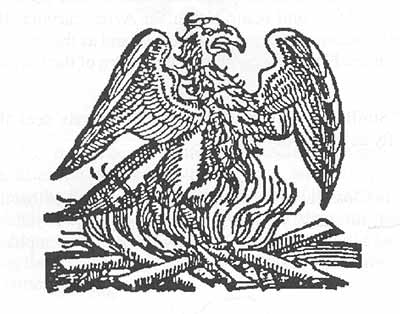
"There was a silly damn bird called a phoenix back before Christ, every few hundred years he built a pyre and burnt himself up... But every time he burnt himself up he sprang out of the ashes, he got himself born all over again. And it looks like we're doing the same thing ..." (Page 163)

This quote shows the similarity between the "phoenix" and what they are going through right now. The phoenix would burn itself and then come back to life as a brand new bird. Since there was recently a war in the novel and so many deeper things going on in their government, this quote shows how they will start all over. Everything is all fallen apart from the war and now it is time to rebuild. Just like the phoenix, they will rise from the ashes of the war and start fresh.

Friday, December 7, 2007

Fahrenheit 451 Study Guide Questions


Study Guide Questions for Fahrenheit 451-DUE 8 JANUARY 2007-TYPED
As you read each section of the novel, answer the following questions in complete sentences. These questions should act as a reading guide and are not intended to replace careful examination of the novel's themes and development.

Part I: The Hearth and the Salamander (pages 3-68)
1. What do the "fireman" do for a living?
A.:The firemen burn books for a living instead of putting fires out.

2. In the opening scene, why are the books compared to birds?
A.:Books have stories about the world and just about anything which shows how they are just as free as a bird, but a birds life can easily be taken away just like a book can easily be burned.

3. According to pages 3-4, what does Montag think of his job?
A.:Montag loves the feeling of burning the books, which is expressed by him when he grins when the job is done.

4. Who does Montag meet on the way home?
A.: Montag meets a girl, Clarisse McClellan, that is described with a face that is "milk-white", dark eyes, and wearing a white dress.

5. During his conversation, Montag says that "You never wash it off completely" referring to the kerosene. What could this mean symbolically?
A.:The phrases symbolizes that he will not change no matter where he is. His views will not change outside of his work.

6. Why do you think that Bradbury would introduce Clarisse before Montag's wife, Mildred?
A.:Because Clarisse is probably going to change the way Montag thinks about the way their government and society is and the burning of books.

7. Why does Mildred need help when Montag gets home?
A.:When Montag goes home, he steps into his dark room and kicks a bottle of pills. Then, he sees that Mildred is laying there all drugged out because she took a lot of the sleeping pills all at once. Mildred obviously needed help because she was unconscious by taking a lot of the sleeping pills.

8. Describe the help that she receives.
A.: One machine (the "Snake") that helps Mildred pumps her stomach and another machine that helps helps her replaces all of her blood with completely new blood.

9. Is there anything unusual about the way the two men go about helping Mildred? How is it unusual?
A.: What is unusual about the two men who help Mildred is that they are not doctors. They are handymen or operators. They did not save Mildred's life the way doctors are supposed to.

10. How is life in Montag's house very different from that of Clarisse's house?
A.:Montag's house seems gloomy and dull, while Clarisse's house is gull of life, love, laughter, lights, and conversation.

11. How does Mildred react after she wakes up from her previous night's experience?
A.:Mildred completely did not know what happened and was so hungry. She kept interrupting when Montag was going to tell her what happened. Mildred did not believe Montag when he told her what happened and what she did.

12. What does Mildred do all day?
A.:Mildred watches TV all day in their houses' parlor.

13. Describe the setup of Montag's TV room.
A.:The three walls in the parlor room are filled with three different TVs. On the fourth wall, Mildred wants another TV.

14. What is Clarisse doing when Montag sees her on page 21?
A.:Clarisse was feeling the rain fall down on her face.

15. How is Clarisse different than Mildred?
A.:Clarisse is open-minded and curious about the world outside of her house. Clarisse seems to be full of life. She is very questionable, caring, understanding, and she listens to people. On the other hand, Mildred cares about one thing and that is herself. She lives her days watching TV and being entertained by it. She does not listen to Montag and has no conversations with him.

16. What is the mechanical hound and what is its purpose?
A.:The Mechanical hound is a robot who's purpose is to find and kill people or animals who do not follow the law by a using needle that came out of it's proboscis and injecting them with morphine or procaine. It was created by the government and is told what to do, showing another sign of being told what to think instead of thinking for themselves. The Mechanical Hound is described as a dog or a spider.

17. What is the hound's reaction to Montag?
A.:The Mechanical Hound growls at Montag showing it's dislike towards Montag.

18. Why does society consider Clarisse “anti-social” (page 29)?
A.:Because she is not like the rest of the people in society. She is social, but noot their kind of social. Their kind of social in school is doing sports (which shows no communication between the people) and hours of book work with silence. Her kind of social is actually communicating with others.

19. At the next fire, what does Montag take?
A.:At the next fire, Montag takes one of the books in the house that was being burned.

20. On page 40, Beatty reveals something very important about himself and his knowledge. What is it?
A.:Beatty reveals that he is full of bits and pieces, which most of the captains have to be.

21. What technology does Mildred use to go to sleep?
A.:Mildred uses a "Seashell" that is placed in her ear to hear things.

22. Who is Mildred's "family"?
A.:Mildred's "family" are the people that she watches everyday on all the three TVs in the parlor.

23. What has happened to Clarisse? How did it happen?
A.:Clarisse might have died four days ago caused by bieng ran over by a car.

24. What is unusual about the way Mildred told Montag about Clarisse?
A.:She talked rushed as if she did not want to talk about what happened to Clarisse. There was no sympathy when Mildred told Montag what had happened to Clarisse. It sounded like Mildred would not have told Montag what happened to Clarisse if he did not bring it up.

25. Read pages 55-62 very carefully. They contain great truths about our world. List three things Beatty talks about in his speech to Montag that are true about our world.
A.:In these pages, it was true when Beatty said that people are impatient. With cartoons in books, reading a book became a breeze and people would not have to complain and wait to see what happens in then end. Beatty also states that there are many minorities mixed everywhere. With that, they would not want to upset them. Things have to be fun and people want to be able to enjoy life. Last, Beatty mentions hows people are untroubled and feel good when they know more. In the book, they do know more and are filled with facts, but they are not filled with things that can bring up an argument.

Part II: "The Sieve and the Sand” (Pages 71-110)
T/F=True or False
26. When was the last liberal arts college shut down?
A.:The last liberal arts college shut down 40 years ago from when Montag saw the retired English professor in the park.

27. T/F: Professor Faber thought Montag’s call was some sort of trap.
A.:True

28. Why did Faber’s fear dissipate when Montag was standing outside his door?
A.:Faber's fear disappeared when Montag stood outside his door because he saw the book that Montag was carrying with him.

29. What did Montag want from Faber?
A.:Montag wanted Faber to listen to him and to teach him to understand what he reads in the books.

30. T/F: Faber reminded Montag that people who are having fun are reluctant to become rebels.
A.: False. Faber says that some do not want to be rebels anymore.

31. How did Montag finally get Faber to consider really helping him?
A.:Montag ripped some pages out of the Bible saying that he could burn it if he wanted to since no one could stop him and because he was a fireman.

32. T/F The Queen Bee analogy underscored Faber’s cowardice.
A.: True. This analogy shows how Faber is like the Queen Bee being inside the honeycomb giving out directions. Faber is giving out directions to Montag by using the device he made.

33. What two items were exchanged before Montag left the professor’s house?
A.:Montag gave Faber the Bible and Faber gave Montag a small green device that he made so they can hear and talk to each other.

34. What is the volcano’s mouth?
A.: The "volcano's mouth" is the parlor (or TV) room.

35. T/F Montag pulled the plug on the living room fish bowl.
A.: False. Montag pulled the main switch of the parlor wall TV.

36. T/F Faber objected to Montag’s poetry reading.
A.: True. Faber did not want Montag to read poetry to MIldred and her friends so that he would not get into trouble.

37. Which lady was affected by the original intent of the poetry?
A.: Mrs. Clara Phelps was the lady who was affected by the orginal intent of the poetry.

38. T/F In the late hours of the night, Faber refused to console Montag for foolishly reading poetry to the poor, silly women.
A.: False. In the late hours of the night, Faber consoled Montag for foolishly reading poetry to the poor, silly women.

39. Listening to Captain Beatty play his harp and needle Montag had what effect upon Guy?
A.: It left Montag confused with what he wants to believe and think now.

40. What interrupted the poker game?
A.: The alarm that gave the address to the alarm and when Montag decided to leave the game by putting down his cards was what interrupted the poker game.

41.Captain Beatty drove the Salamander to whose house?
A.: Captain Beatty drove the Salamander to Montag's house.

Part III: Burning Bright (pages 111-166)
42. How has Beatty given Montag hints that he is under suspicion?
A.: Beatty has given Montag hints that he was under suspicion by sending the Hound to his house.

43. Who must have brought the books back from the garden?
A.: Mildred must have brought the books back from the garden.

44. Who (3) TURNED IN AN ALARM AGAINST Montag?
A.: Mildred, Mrs. Bowles, and Mrs. Phelps turned in an alarm against Montag.

45. What happened to Montag’s green bullet?
A.: Beatty hit Montag, which caused the green bullet to fall onto the sidewalk. Beatty found out what it was, so he turned it off and put it in his pocket.

46. Why did Montag burn Beatty's body?
A.: Montag burned Beatty's body because Beatty was going to trace down Faber by the green bullet and bring Faber into this mess. Also, because Beatty was pushing Montag to do itby saying things that made Montag angry.

47. What is Montag’s plan to escape?
A.: Montag's plan to escape is to go to Faber's house, give Faber the money, then run away, maybe to open country and live near rivers, highways, fields, or hills.

48. How much money did Montag give Faber?
A.: Montag gave Faber $100.00.

49. How many scents can the mechanical hound remember?
A.: The Mechanical Hound can remember ten thousand scents.

50. Why did Montag want Faber to turn on the air conditioning and sprinklers?
A.: Montag wanted Faber to turn on the air conditioning and sprinklers so that the Mechanical Hound will not find Montag's trail in Faber's home.

51. Interpret “Twenty million Montag's running, soon, if the cameras caught him.”
A.: This quote means that Montag would show up on twenty million TV screens in the city.

52. Why did the search for Montag veer inland?
A.: The search for Montag veered inland because the scent of Montag threw off the Mechanical Hound when it smelt Montag's clothes in the river. Montag was covered with liquor and Faber's old clothes so that his scent would be hidden.

53. Who died in Montag’s place?
A.: An innocent man walking along an empty street died in Montag's place. Because the Mechanical Hound could not find Montag and they needed to kill someone to show that Montag was killed, the decided to kill the innocent man.

54. What did Granger mean by “Welcome back from the dead.”
A.: When Granger said, "Welcome back from the dead" he meant it as a joke, because the Mechanical Hound killed someone else and yet Montag was still there. Also, because Montag finally came into focus with what the rest of them were saying.

55. When Granger and other like minded people are stopped by authorities, why isn’t any incriminating evidence found?
A.: No incriminating evidence were ever found when Granger and other like minded people were stopped by authorities, because it was all memorized in their heads. The books will never be found, because it was memorized and is now stuck in their heads.

56. Do you have a sense that there are other “book chapters” in other towns. What proof do you have?
A.: Yes, I do sense that there are other "book chapters" in other towns. My proof is that some live in Maine, rail tracks and small towns. Some live in different places to remember different chapters of a book.

57. What does Granger mean by his quote “You’re not important. You’re not anything.”?
A.: You cannot think about "you" right now. Right now, you have to think about what is important and about the other people around the world who need help.

58. Explain the last implications of the events in the last 4-5 pages.
A.: This last implications of the events in the last 4-5 pages describes how Montag and the people that he is with are going to help rebuild the wreckage of the city. This is their time to help the city that need help a long time ago. Even though they are against the laws of the city's government, they are going to help they city and make it better than what it was. In time, they city will get better, and if it ever got worse again, they would always be there to start over.

Suggested Essay Topics-
Directions: Write a 3-5 page paper on one of the following topics. Use MLA format.
DUE 8 JANUARY 2007- TYPED
1. How does Faber define the value of books? Does his definition of “quality” apply to media other than printed books? Do you think his definitions are accurate or not? Explain.
2. Discuss Montag’s relationship with Mildred. Is this a typical marital relationship in their culture? Discuss the role of family in the characters’ lives, particularly in relation to the TV parlor “families” and their nature and function.
3. Describe Clarisse’s effect on Montag and her function in the novel. How and why does she change him? Why does she vanish from the novel?
4. Discuss the use of quotations from literature in Fahrenheit 451. Which works are quoted and to what effect? Pay specific attention to “Dover Beach,” the Bible, and quotes from Shakespeare.

MLA Format: http://owl.english.purdue.edu/owl/resource/557/01/